Industry · Food & beverage
AI for food manufacturers: orders, lots, and quality on track.
AI for food manufacturers takes on the paperwork around production: orders from wholesalers and foodservice, spec sheets requested by retail chains, complaints to trace back to a lot. Clean order entries can go through on their own, but anything involving allergens stays with your QA team for review.
- Non-EDI orders entered before 7 AM
- Every complaint traced to its lot
- Allergens always reviewed by QA
30-minute callNo commitmentReply within 24 hours
Order desk log · ThursdayExample
- 6:45 AMDurand wholesale order entered, 22 linesAuto
- 7:30 AMUnusual quantity flagged to AliceApproved
- 8:10 AMSpec sheet ready for a retail chainApproved
- 9:20 AMLot L2641 complaint: foreign objectApproved
- 10:05 AMDelivery date confirmed to customerAuto
- 11:40 AMWeek 43 forecast updatedAuto
Tasks handled this morning: 0
Your day-to-day
Thin margins, mounting paperwork.
Orders in every shape, spec sheets to keep current everywhere, complaints to trace: the office is racing while the lines run.
- 01
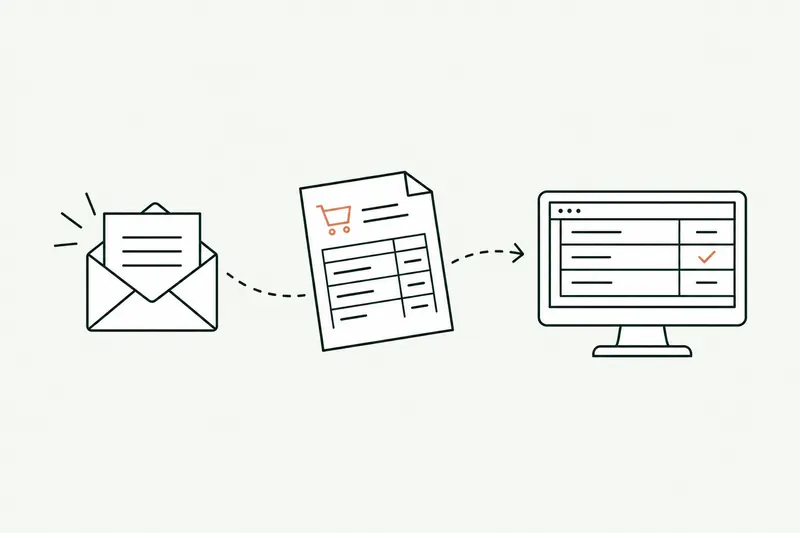
Non-EDI orders, in every format
Retail chains use EDI, but wholesalers, restaurants, and grocers send PDFs, emails, and photos: the order desk retypes it all, early in the morning.
- 02
Product specs to keep current everywhere
Ingredients, allergens, nutrition facts, best-by dates: every recipe change means updating the spec sheet, the label, and your customers’ portals.
- 03
Complaints coming in from everywhere
A customer email, a website form, a call from a store: you have to find the lot and the production date, and reply fast, without missing anything.
Six tasks to hand off to AI
From non-EDI orders to the weekly forecast.
Orders and product answers can go through on their own once proven. Spec sheets, complaints, and forecasts are prepared for the person who signs off on them.
- Can run on its own
Enter orders received by email
The order form is read, each line matched to your item codes and case packs, and the order created in the ERP before the cutoff.
ServiceBusiness process automation - With approval
Prepare product spec sheets
From the recipe and your suppliers’ spec sheets, the sheet is filled in: ingredients, allergens, nutrition facts. Your QA team reviews it.
ServiceBusiness process automation - With approval
Sort and prepare complaint files
Each complaint is sorted by reason and traced to its lot and production date, with a reply drafted for QA.
ServiceAI agents for business - Can run on its own
Answer product questions
Allergens, origin, storage, certifications: the answer comes from your approved spec sheets, with the page it came from.
ServiceAI chatbot for your documents - With approval
Trace a lot in minutes
Raw materials, production lots, customers shipped: ERP and production data are cross-checked for a traceability investigation.
ServiceAPI integration - With approval
Prepare the weekly forecast
Sales history, planned promotions, and open orders produce a forecast by product, which production planning adjusts.
ServiceAI integration
A typical day
Up against the production cutoff, before and after the tool.
Same customers, same volumes: the 7 a.m. cutoff is met without a scramble.
Today
- 6:30 AMOpening 35 order emails, sorting by hand
- 7:00 AMKeying PDF orders into the ERP before the production cutoff
- 9:30 AMTracking down a lot after a store complaint
- 11:00 AMRetailer’s spec sheet filled in from memory
With the tool
- 6:30 AMOrders already entered, one quantity to check
- 7:00 AMProduction cutoff met, no scramble
- 7:30 AMComplaint traced to its lot, reply ready for review
- 8:00 AMSpec sheet prepared, reviewed by QA
Illustrative example: fictional company and schedule.
A spec sheet due to a retailer?
On the first call, I’ll show you the tool that prepares it from a sample recipe, ready for review. Thirty minutes, no commitment.
Your software
ERP, quality, traceability: the tool reads what you already keep.
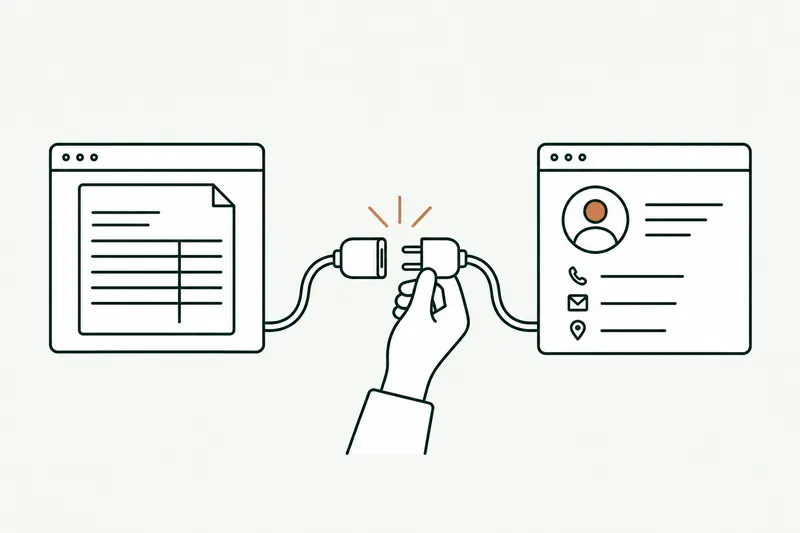
It works in your ERP, your email, and your QA team’s spreadsheets, and fills in your customers’ product spec portals.
- Sage
 Cegid
Cegid EBP
EBP- Odoo
- SAP
- Outlook
- Gmail
- Excel
- Google Sheets
- SharePoint
- Teams
Divalto, a specialized food ERP, quality or traceability software, your customers’ product spec portals? If they offer an API or exports, they can be connected. I’ll confirm it on the very first call.
About
You talk to the person who builds it.

Loïc Legrand
AI developer & UX designer · Paris
As the founder of DigitalCX, I take your first call, design the tool, write the code, and look after it once it’s live.
- No salespeople, no subcontracting
- 8 years of experience
My AI agents
They catch blind spots from the start and watch for instability.
- Testing agentReplays every real case before delivery
- Code review agentReviews every code change
- Documentation agentUpdates the guide and the log
- Monitoring agentChecks nightly that everything runs
- Updates agentTracks updates to your software
Every piece of work an agent prepares goes out only after Loïc approves it.
Clients who’ve trusted me.
From SMBs to international groups.












- Jobify
The food industry guide
Food & beverage AI: what to hand off, what to keep.
In food and beverage, margins are thin and mistakes are expensive: a mis-keyed order goes out on a truck, a wrong product spec can lead to a recall. AI for food manufacturers gives time back on the office tasks that come up every day, as long as your team keeps the food safety decisions.
Unusual situation? In 30 minutes, I’ll tell you what AI can take on, and what it shouldn’t do.
Book a call01Non-EDI orders: can AI enter them?
Yes, and it’s often the first project. Large grocery chains send their orders by EDI: that channel works, and AI adds nothing to it. It handles the rest: wholesalers, foodservice, specialty food stores, export customers, who still send a PDF, an Excel sheet, or an email typed out by hand.
The tool reads the order, recognizes the customer, and matches each line to your item codes, case packs, and units (cases, layers, pallets), then prepares the order in the ERP. An unusual quantity, a discontinued item, or a price that differs from your price list is flagged to the order desk instead of being entered. At first, every order is approved. Later, clean orders can go through on their own before the production cutoff. The details of this business process automation with AI are on the service page.
02Allergen and spec sheet automation: how far should AI go?
You can hand it the preparation, not the decision. The tool starts from the recipe, your suppliers’ spec sheets, and your existing sheets, then fills in the sheet each customer asks for: ingredient list, allergens to highlight, nutrition facts, storage conditions, shelf life. It also flags discrepancies, for example a supplier that has changed a raw material.
For allergens, approval by your QA team remains the recommended setting, even after months of trial runs: it’s food safety information, and an AI model can make mistakes. The gain lies elsewhere: no more filling in from memory, one up-to-date source, and every customer portal filled from it. An AI chatbot built on your approved spec sheets can then answer customer questions about origin or storage.
03Traceability and complaints: AI backing up your QA team
A complaint comes in by email, through the website, or from a store. The tool sorts it by reason (foreign object, taste, packaging, date), links it to the lot and production date when that information is provided, and drafts both the reply to the customer and the nonconformance report. Your QA team makes the call.
For a traceability investigation, it cross-checks ERP and production data: raw material lots, production lots, customers shipped. The tool doesn’t replace your HACCP plan or your IFS or BRCGS procedures. It saves time finding information when every hour counts, and spots complaints that keep recurring on the same line or with the same supplier, with a likely cause to verify. The same methods work in other plants: see AI for small manufacturers.
04Sales forecasts: what AI in the food industry is really worth
They’re useful if the history exists. The tool starts from your past sales, promotions announced by retailers, orders already received, and the season, then proposes a forecast by product for the following week. Big variances are explained: a promotion, a public holiday, a customer who ordered early.
It’s not a crystal ball: for a new product or unusual weather, the person who does the planning stays in control. The benefit is starting every Monday from solid numbers rather than a copied spreadsheet, and wasting less on short-dated products. Every week, the gap between forecast and actual sales is measured, so the method improves with your own numbers.
Questions
What food manufacturers ask. Clear answers, no overpromising.
EDI, allergens, costs, recipes: what owners of small food companies ask me.
01Does AI replace our EDI with grocery chains?
No. EDI remains the right channel for the retailers that use it. AI handles the orders that still come in by email, PDF, or phone, often from your many smaller customers.
02Can we let AI handle allergens on its own?
I don’t recommend it. AI prepares the spec sheet and flags raw material changes, but the allergen list stays approved by your QA team, even when everything else runs on its own.
01Where should a small food manufacturer start with AI?
With the task that comes up most often and weighs most on your team: usually non-EDI order entry or spec sheets. The 10-day audit measures it, then the prototype is built in 5 days on your own documents.
02How much does AI for food manufacturers cost?
The price depends on the task you choose and the systems to connect. It’s fixed and written in the proposal, along with the go-live date. The audit fee is credited toward the prototype if you continue, and nothing changes on the production floor.
01Do our recipes stay confidential with AI?
Yes. Your recipes don’t leave the tools you control, except to be processed as requested by an AI provider named in the contract, which doesn’t train on your data. It can be European if you prefer, and the accounts are in your name.
Other industries
Same tasks, different names
Contact
Which task do you want to stop doing by hand?
Describe it in one sentence. I’ll tell you if AI can really take it off your plate.
On the call, we look at your workflow together and I show you the closest tool, on sample data. If a simple setting in your software does the job, I’ll tell you.
The blog
Go further
- Automation · 10 minEDI or AI: automating the entry of email orders into your ERPOrder EDI only covers your biggest customers: the others still send PDFs, spreadsheets, and emails that the order desk retypes into the ERP. Here’s how AI reads those orders, checks them against your rules, and prepares them in the software, and what e-invoicing won’t change.Read the article
- Automation · 11 minSage 100 API (France): connecting AI and your other software to your ERPThere isn’t one Sage 100 API, but several ways in, and the right one depends on your version and your hosting. Here’s a neutral map of those paths, what each one lets you read or write, how to plug AI into them, and where Odoo, EBP, and Cegid stand.Read the article
- Agents & chatbots · 11 minAI agent, chatbot, or automation: what’s the difference, and which one fits your business?An AI agent decides the next step on its own and acts in your software, a chatbot answers questions, and an automation follows a path written in advance. Here’s how to tell them apart, six examples from a small business’s day-to-day, and five questions so you don’t pay for an agent where a rule will do.Read the article