Industry · Transportation & logistics
AI for logistics companies: fewer calls, fewer claims.
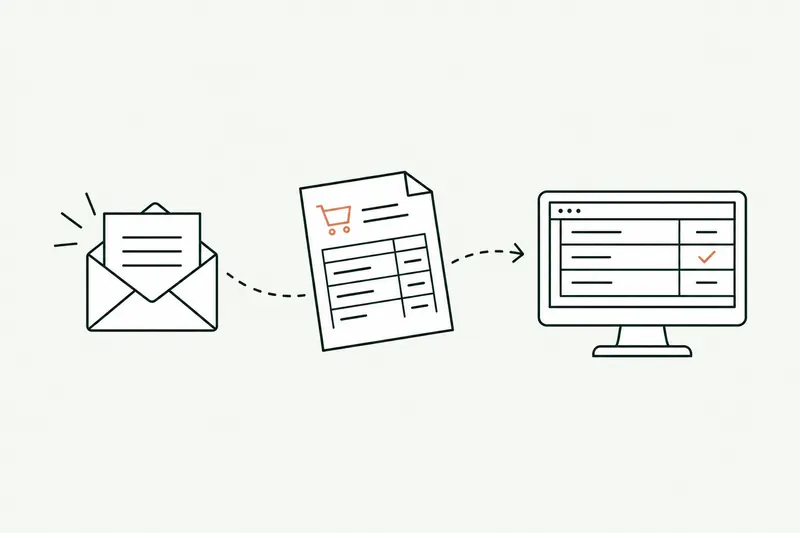
AI for logistics companies works in dispatch: it reads freight orders received by email, answers customers asking where their delivery is, and files each consignment note (CMR) with the right order in your TMS. Your dispatchers keep the tricky cases, and routine tracking updates can go out on their own.
- Freight orders read from emails
- “Where’s my delivery?” answered
- CMRs and PODs filed to the right order
30-minute callNo commitmentReply within 24 hours
Dispatch log · MondayExample
- 6:45 AMMartin SA freight order entered, 6 palletsAuto
- 7:30 AMDurand notified of delay, new ETAAuto
- 8:10 AMTracking request answered, POD attachedAuto
- 9:20 AMTuesday route: 2 pickups addedApproved
- 10:05 AMCMR exceptions noted, claim file openedApproved
- 11:30 AMCarrier invoice matched, variance flaggedApproved
Tasks handled this morning: 0
Your day-to-day
The trucks are rolling, dispatch is drowning.
Retyping, tracking calls, PODs nobody can find: dispatch time goes everywhere but the routes.
- 01
Freight orders to retype
Emails, PDFs, spreadsheets, calls: every pickup is copied into the TMS (address, weight, time slot), with the risk of a dock mix-up.
- 02
Phones ringing for status updates
“Where’s my delivery?” The answer is in the TMS or with the driver, but someone has to look it up, call after call.
- 03
Claims won or lost on one document
Exceptions on the CMR, a missing POD, a disputed invoice: without the right document at the right time, the claim drags on and payment waits.
Six tasks to hand off to AI
From freight order to claim file.
Tracking replies and invoice checks can quickly run on their own. Planning and claims stay as proposals for the dispatcher, who makes the call.
- Can run on its own
Enter freight orders
The email or PDF is read, addresses, weights, pallets, and time slots checked, and the order created in the TMS.
ServiceBusiness process automation - Can run on its own
Answer customers on delivery times
Status, ETA, delay: the reply goes out with data from the TMS, or goes to dispatch at the slightest doubt.
ServiceAI agents for business - Can run on its own
File proofs of delivery
CMRs and signed delivery receipts are read and filed to the right order. Any exceptions are spotted and passed to dispatch.
ServiceBusiness process automation - Can run on its own
Audit freight invoices
Invoices from contracted carriers and subcontractors are compared with orders and rates; only discrepancies are escalated.
ServiceBusiness process automation - With approval
Build claim files
Exceptions, photos, POD, and correspondence are gathered; the claim file is ready to send to the customer or the insurer.
ServiceAI agents for business - With approval
Draft the route plan
Today’s orders, time slots, available vehicles and drivers: a draft plan is ready, and the dispatcher adjusts it.
ServiceAPI integration
A typical day
6:30 a.m. in dispatch, before and after.
Same trucks, same customers: delays are announced before anyone asks.
Today
- 6:30 AMOvernight orders retyped into the TMS
- 8:00 AMCustomer calls about deliveries in progress
- 9:30 AMHunting for a CMR for a claim
- 11:00 AMTomorrow’s plan redone by hand
With the tool
- 6:30 AMOrders entered, two addresses to check
- 8:00 AMTracking answered, delays already announced
- 9:30 AMClaim file ready, CMR attached
- 10:00 AMPlan proposed, adjusted by the dispatcher
Illustrative example: fictional company and schedule.
How many tracking calls yesterday?
On the first call, I’ll show you the assistant that answers from the TMS, on sample data. Thirty minutes, no commitment.
Your software
TMS, WMS, email: the tool works with them.
It reads your TMS and WMS, your email, and your order management software. Your drivers keep their app.
- Outlook
- Gmail
- Excel
- Google Sheets
- Sage
 Cegid
Cegid- SAP
- Odoo
- Teams
- SharePoint
- HubSpot
A TMS like Dashdoc or Akanea, a WMS like Reflex or Generix, a visibility platform like Shippeo? If it shares its orders and statuses through an API or exports, the tool plugs in. I’ll check yours on the first call.
Services involved
The building blocks for your industry
About
You talk to the person who builds it.

Loïc Legrand
AI developer & UX designer · Paris
As the founder of DigitalCX, I take your first call, design the tool, write the code, and look after it once it’s live.
- No salespeople, no subcontracting
- 8 years of experience
My AI agents
They catch blind spots from the start and watch for instability.
- Testing agentReplays every real case before delivery
- Code review agentReviews every code change
- Documentation agentUpdates the guide and the log
- Monitoring agentChecks nightly that everything runs
- Updates agentTracks updates to your software
Every piece of work an agent prepares goes out only after Loïc approves it.
Clients who’ve trusted me.
From SMBs to international groups.












- Jobify
The logistics guide
AI in transportation and logistics: real-world uses.
In transportation, every minute of dispatch time counts. Yet a good share of it goes to office tasks: retyping orders, answering tracking requests, finding a CMR, checking a carrier invoice. Tasks done in a rush, where a wrong address or time slot costs a trip.
AI for logistics companies gives that time back without touching what already works in your TMS.
Unusual situation? In 30 minutes, I’ll tell you what AI can take on, and what it shouldn’t do.
Book a call01Automating freight order entry from email
It’s often the first thing to automate. Your customers send pickup requests in every possible form: plain text in an email, a PDF, an Excel sheet, sometimes a scanned form. AI reads each request, extracts the shipper, consignee, addresses, pallet count, weight, time slots, and constraints (liftgate, appointment, hazmat), then creates the order in your TMS.
Anything outside the rules is flagged instead of entered: an incomplete address, an impossible time slot, an unknown customer, a weight that doesn’t add up. At first, dispatch approves every order. Later, clean orders can go through on their own.
Customers who use EDI or your portal don’t have to change a thing. It’s the same business process automation with AI used for customer orders, applied to freight order entry.
02Delivery tracking: AI answers your customers
“Where’s my delivery?” is the most common question at any transportation customer service desk. The answer already exists, in the TMS, the driver’s app, or the visibility platform. Someone just has to look it up.
The tool handles it, by email, by chat, or over the phone with an AI receptionist:
- it finds the order from a number, a name, or a customer reference;
- it gives the status, the ETA, and, once delivered, the proof of delivery;
- it tells the customer about a delay as soon as it shows up in your data, instead of waiting for them to call.
An unusual request, an unhappy customer, or a delivery with an exception goes to someone in dispatch, with the history already pulled together.
03Proofs of delivery, invoices, and claims
A claim is won or lost on a document. The tool reads every CMR (the consignment note used for road freight in Europe) and every signed receipt, files it to the right order, and spots any exceptions written by the consignee: damaged or missing packages, late delivery. Dispatch is alerted right away, not three weeks later when the invoice is disputed.
When a claim opens, the file builds itself: order, POD, exceptions, photos, customer correspondence. Your team reviews it and decides what’s next.
On the purchasing side, invoices from carriers and subcontractors are matched against orders and agreed rates. Price discrepancies, detention charges, or trips billed twice go to a person. The rest goes through, and customer billing no longer waits for everything to be checked off by hand.
04AI in logistics and route planning
Off-the-shelf TMS software already works out routes from addresses and constraints: AI doesn’t need to redo that math. It works before and around it. It pulls together the day’s orders, promised time slots, and available vehicles and drivers, flags what’s missing, then prepares a draft plan for the dispatcher to adjust. Their knowledge of tricky docks and demanding customers stays at the center.
The tool doesn’t replace your dispatchers or your customer service team. It takes away the retyping and the searching, the busywork that seems harmless until a time-slot mistake costs an empty run. Each task is set separately, with approval or on its own, and you can take back control in one click. Do you mostly deliver your own goods? AI for distributors starts from the customer order.
Questions
What carriers ask. Answers from the road.
TMS, drivers, timelines, cost, data: what carriers and logistics providers ask.
01Does logistics AI connect to our TMS or WMS?
Yes, if your TMS or WMS can share its data through an API or exports. The tool reads orders and statuses, and creates new orders there. I check yours with you on the first call.
02Do our drivers have to switch apps?
No. Drivers keep their app or their phone; the tool reads what already comes back, like statuses and proofs of delivery. Nothing is added to their route.
01How long does it take to automate freight order entry?
After the 10-day audit, the prototype is built in 5 days on your own freight orders. Go-live follows on a date written in the proposal, with dispatch approving orders at first.
02How much does AI for logistics companies cost?
The price depends on the number of tasks and systems to connect. It’s fixed and in writing before we start, like an agreed freight rate. The audit measures the time lost, and its fee is credited toward the prototype if you continue.
01Will our customer data and freight rates stay confidential?
Yes. The accounts and code are in your name, and private recipients’ addresses are handled under the GDPR. The AI provider is named in the contract, European if you prefer, with no training on your data.
Other industries
Same tasks, different names
Contact
Which task do you want to stop doing by hand?
Describe it in one sentence. I’ll tell you if AI can really take it off your plate.
On the call, we look at your workflow together and I show you the closest tool, on sample data. If a simple setting in your software does the job, I’ll tell you.
The blog
Go further
- Automation · 10 minEDI or AI: automating the entry of email orders into your ERPOrder EDI only covers your biggest customers: the others still send PDFs, spreadsheets, and emails that the order desk retypes into the ERP. Here’s how AI reads those orders, checks them against your rules, and prepares them in the software, and what e-invoicing won’t change.Read the article
- Automation · 11 minSage 100 API (France): connecting AI and your other software to your ERPThere isn’t one Sage 100 API, but several ways in, and the right one depends on your version and your hosting. Here’s a neutral map of those paths, what each one lets you read or write, how to plug AI into them, and where Odoo, EBP, and Cegid stand.Read the article
- Agents & chatbots · 11 minAI agent, chatbot, or automation: what’s the difference, and which one fits your business?An AI agent decides the next step on its own and acts in your software, a chatbot answers questions, and an automation follows a path written in advance. Here’s how to tell them apart, six examples from a small business’s day-to-day, and five questions so you don’t pay for an agent where a rule will do.Read the article