Key takeaways
- One provider in France that publishes its 2026 prices puts a simple internal tool at €10,000 to €30,000 before tax, an application connected to the ERP at €30,000 to €80,000, and a complete system at €60,000 to €150,000 and up.
- The gap between two quotes comes from the number of business rules, the connections to your software, any AI involved, and the scoping time: a quote with no scoping can’t be compared.
- On top of the build cost, add maintenance (often 10 to 20% a year), hosting and, if there’s AI, its monthly usage cost. Insist on a fixed price in writing and the code in your name.
How much does custom software cost? Going by the providers in France that publish their rates in 2026, custom software development costs €10,000 to €30,000 before tax for a simple internal tool, €30,000 to €80,000 for an application at the core of your processes and connected to the ERP, and €60,000 to €150,000 and up for a complete system (customer portal, mobile app, several connected tools). Under €5,000, you’re usually looking at a script or a no-code tool.
These ranges are wide because “custom” covers very different projects. I don’t post a price list: every project has a fixed price, put in writing after the audit. But I can give you a method to read a quote, tell whether the figure is reasonable, and avoid the costs that don’t show up in it.
What is custom business software?
Custom business software is a tool built around the way a company works, instead of an off-the-shelf product the team has to adapt to. The company owns it, it does exactly what the company needs, and it plugs into the software the company already uses. A few typical examples in a small business:
- order taking by sales reps or customers, with each customer’s prices and discounts, sent straight to the ERP;
- service call tracking for technicians: schedule, report, photos, customer signature, export to invoicing;
- a customer portal where your customers track their orders, download their documents, and ask their questions;
- a dashboard that brings figures from the ERP, the CRM, and accounting together on one page.
Today, these tools often include some AI: reading a document, summarizing a file, suggesting a reply. That’s what I build as custom business software, always plugged into the tools you already have.
How much does custom software cost in 2026?
Few providers publish figures. Among those that do, the French agency Fenxi gives clear price ranges, updated in September 2026:
| Type of application | Published range (before tax) | Example given |
|---|---|---|
| Simple internal tool or first version | €10,000 to €30,000 | Internal request management, simple case tracking |
| Core business application | €30,000 to €80,000 | Full service call management with scheduling, reports, photos, and accounting export |
| Complete system | €60,000 to €150,000 and up | Customer portal, internal portal, and mobile app connected to the ERP and invoicing |
| Under €5,000 | — | More likely a no-code tool or an enhanced script |
To check a quote, another approach is to work back from the time involved. Published 2026 rate guides put a freelance developer’s day rate in Paris and the Île-de-France region at €350 to €450 for a junior profile, €500 to €650 for a mid-level profile, and €650 to €800 and up for a senior. Rates run 15 to 20% lower elsewhere in France. A simple calculation gives the order of magnitude: 40 days of work at €500 comes to €20,000 before tax, and 120 days to €60,000 before tax. An agency adds project management, design, and its overhead on top.
A simple internal tool
A few screens, one or two rules, few users, its own database. That’s often the place to start: a tool that solves a single problem, fast, and that you build on afterward.
An application connected to the ERP
It reads and writes in your software, applies your business rules, and serves several departments. It’s the most common case in wholesale and manufacturing, and the one where connections weigh most heavily on the price.
A multi-user platform or portal
Customers, suppliers, or technicians log in, each with their own permissions. Security, account management, the mobile app, and support drive the cost up.
Why can custom software development costs vary threefold?
Two quotes for “the same need” almost never describe the same software. One counted three business rules, the other fifteen. One assumes a file import, the other an API. Here’s what drives up the cost of each building block.
| Building block | What drives it up |
|---|---|
| Scoping and screen design | Many user profiles, processes never written down, internal disagreements to settle |
| Business rules | Customer-specific pricing, exceptions, multi-step approvals, calculations specific to your business |
| Connections | An ERP with no API, several tools to connect, data to migrate or clean up |
| AI in the application | Varied documents to read, answers to source, logging and review to plan for |
| Acceptance testing and go-live | Tests on your real data, training, migrating historical data |
The number of processes and business rules
It’s the first factor, and the most underestimated. A rule like “5% off above 100 cases, except on promotional items, except for buying groups” costs more to build and test than a screen. The more your rules are written down before the quote, the more accurate the figure.
Connections: ERP, CRM, API or no API
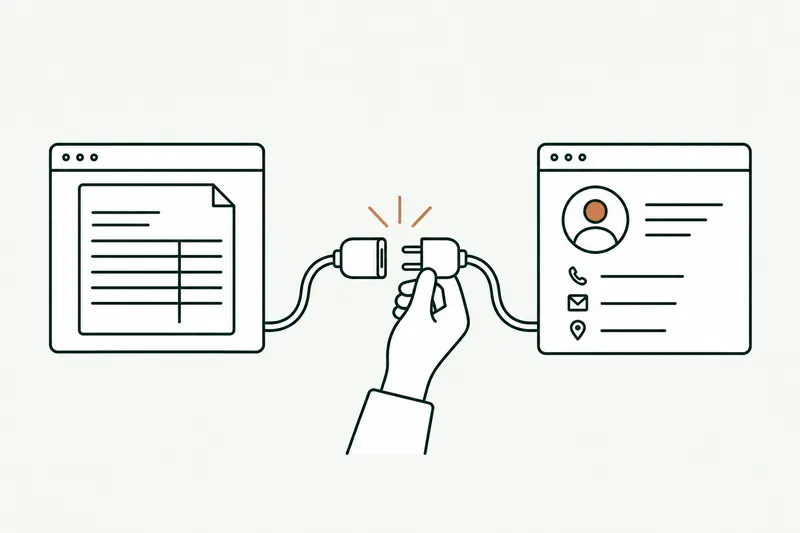
Connecting the application to an ERP with a documented API takes a few days. Without an API, you have to go through imports and exports, or a connector, and the work goes up significantly. Check your subscription too: on Odoo Online, the external API is only included in the Custom plan. This is no small matter: Insee, France’s national statistics office, reports that incompatibility with existing equipment holds back AI for 38% of companies with 10 to 49 employees that don’t use it, and 45% of those with 50 to 249. I cover this for Sage in the article on the Sage 100 API (France), and the work itself on the API integration page.
AI in the application: build cost and usage cost
An AI feature has two costs. The first is paid once: designing the instructions, the rules, the review, and the log, then testing on your documents. The second is paid every month: model providers (Anthropic, OpenAI, Mistral…) bill by the volume of text processed. That usage cost depends on your volumes and the model you choose. It’s measured on a real sample during the prototype, and it should appear in the quote as a separate line, on an account in your name.
Scoping and designing the screens
A quote that budgets almost nothing for scoping isn’t cheaper: it pushes the cost down the road, in the form of change orders. Screens designed with the people who will use them make the difference between a tool that gets adopted and one that gets bypassed with a spreadsheet.
Key point Compare quotes building block by building block, not by the total. Ask each provider for the breakdown in days: scoping, screens, rules, connections, AI, acceptance testing. A provider who can’t give it hasn’t understood your needs.
What does custom software cost over 3 years?
The build price is only the first line. Over three years, you need to add:
- maintenance: fixes, security updates, adapting to new versions of your software. Fenxi generally puts it at 10 to 20% of the initial cost per year, sometimes less: about €2,000 a year in its example of an application costing about €30,000;
- hosting: server, database, backups, domain name. It’s a monthly cost that depends on the number of users and the availability requirements, and it should be priced in the quote;
- AI usage cost, if any, measured during the prototype;
- enhancements: a useful application sparks new requests. Budget for them rather than having them sprung on you.
| Calculation (fictional example) | Year 1 | Years 2 and 3 |
|---|---|---|
| Build | €40,000 | — |
| Maintenance (15% a year) | — | €6,000 a year |
| Hosting (assumption: €150 a month) | €1,800 | €1,800 a year |
| 3-year total, excluding AI and enhancements | €57,400 | |
This table is a calculation based on assumptions, not an average. Above all, it shows that a €10,000 difference in the build matters less than poorly scoped maintenance over three years.
Custom, off-the-shelf, or a rebuild: how do you decide?
Custom isn’t always the right answer. Often, the cheapest solution is off-the-shelf software that’s well connected to everything else.
| Off-the-shelf only | Off-the-shelf + integration | Custom-built | |
|---|---|---|---|
| When to choose it | Your process is standard (payroll, accounting, a typical CRM) | The software fits, but it doesn’t talk to your other tools | The way you work is your edge, or no software covers it |
| Upfront cost | Low, per-user subscription | Moderate: subscription plus connections | The highest |
| Timeline | A few days to a few weeks | A few weeks | A few weeks to several months |
| Limits | You adapt to the software | Depends on the vendor’s APIs | Maintenance to plan for, dependence on the provider if you don’t own the code |
My rule is simple: if off-the-shelf software covers 80% of the need, I connect it to everything else rather than rebuild it. Custom is worth it when the tool touches the core of your business, where the way you work sets you apart.
Rebuilding an existing business application
Many small businesses already have a homegrown tool: an Access database, a big Excel workbook full of macros, a web application built ten years ago. Rebuilding a business application often costs less than a new project, because the rules already exist: they’re in the tool, and the team knows them. It costs more when no one knows what the code does anymore, or when the data needs a deep migration. In that case, I start with an audit of what exists: what’s used, what no longer is, and what we keep as is.
What should you ask before accepting a quote?
Seven questions that head off most bad surprises:
- Is the price fixed, or time and materials? With time and materials, you pay for the time spent: the risk is yours. With a fixed price, the provider commits to a written scope and amount.
- Is the project split into phases? A useful first phase delivered quickly beats a big project delivered all at once.
- Who owns the code and the accounts? The code, the hosting, and the AI provider accounts should be in your name, with the transfer of rights written into the contract.
- What’s the go-live date, and what happens if it’s missed?
- What does maintenance include, and at what price? Fixes, updates, response time if something breaks.
- Are AI usage and hosting priced separately?
- Can I see the result on my own data before committing to the whole project?
That’s the method I use. After the first call, where I demo your use case on sample data, a 10-day audit measures the time you’re losing and puts the scope in writing. Then a prototype runs on your data for 5 days, and the audit fee is credited toward it. The full project then has a fixed price and a go-live date in writing, and the code is in your name. If you don’t know yet which task to tackle first, the AI audit page explains what this step delivers.
Grants and tax credits in France: what to expect
The innovation tax credit (CII) runs until December 31, 2027, at 20% in mainland France, for small and midsize businesses that design prototypes of new products, up to €400,000 of spending a year. An internal tool that automates your processes generally doesn’t fit that definition. As for the research tax credit (CIR), the ministry’s guide is clear: simply developing software or a new feature, with no explicit research approach, isn’t eligible. For depreciating the software, check with your accountant. Public grants for going digital and for AI diagnostics are covered in a separate article on Bpifrance’s Diag Data IA and AI grants in France.
What I don’t recommend
- Going custom where off-the-shelf would do. Rebuilding a CRM or an accounting system is expensive and adds nothing. Save custom work for what sets you apart.
- Signing a quote with no scoping. A figure given after a one-hour meeting is an estimate, not a price. It will be corrected through change orders.
- Choosing on the build price alone. Compare the cost over three years, maintenance, hosting, and AI included.
- Accepting code and accounts in the provider’s name. If you switch providers, you need to be able to leave with everything.
- Dismissing no-code on principle. For a simple need, few users, and modest volumes, a well-built no-code tool is often enough. It hits its limits with complex rules, high volumes, or tricky connections.
- Building everything at once. A first phase that’s live and used by the team teaches you more than a 50-page specification.
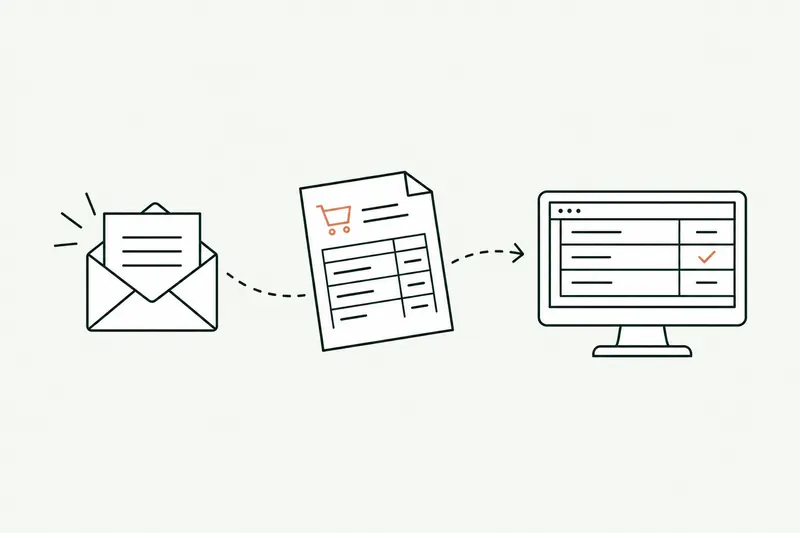
Cost is the top barrier to AI cited by the French small and midsize business leaders surveyed by Bpifrance Le Lab. The best answer isn’t a low price, but a readable one: every building block priced, a fixed amount, a result you can see on your data. For a concrete example of what a small application can solve, read the article on automating email order entry in your ERP. If you’re in wholesale and distribution, it’s often the first tool to build.
Sources
- Price of a custom application for a small business, Fenxi (in French), published December 11, 2025, updated September 3, 2026
- Freelance web developer day rates in 2026, Freelance Solution (in French), May 2026
- Use of artificial intelligence in businesses, Insee Première No. 2120 (in French), July 21, 2026
- AI in French small and midsize businesses: a quiet revolution, Bpifrance Le Lab (in French), June 4, 2025
- External API, Odoo 19.0 documentation
- Odoo pricing, odoo.com
- Innovation tax credit (CII), Service-Public.fr Entreprendre (in French), checked February 20, 2026
- Publication of the 2025 CIR guide, Deloitte Société d’Avocats (in French)
- Research tax credit (CIR), French Ministry of Higher Education and Research (in French)

Loïc Legrand
AI developer and integrator in Paris, founder of DigitalCX. Eight years of web development and design; he builds AI tools plugged into the software small businesses already use.